


In the first part of my blog, I described the effects of the COVID-19 pandemic on the market and on some of the big companies (e.g, Facebook, Google, Amazon) when it comes to digital advertising. Now, based on the same Mintel research, I will show you the latest news when it comes to the consumer perspective on online ads and more.
Consumer behaviour towards online advertising :
- 79% of people think it is important to know that companies protect their personal information;
- Half of the people who notice online adverts have cleared their browsing history in the last three months, rising to 60% among men aged 55+;
- More companies are introducing real-time messaging apps to offer customer service;
- Younger people are significantly more likely to click on an online advert and to choose not to skip a video advert, mostly because young people are already comfortable with online ads;
- Older people are particularly unlikely to click on online adverts, with only 14% of men aged 65+ having done so compared to 31% of women of the same age group;
As we can see in the graph below, older generations were the most sceptical regarding online ads, with 29% having an ad-blocker and 24% not even being interested in noticing ads. Brands and marketers should find more ways to connect online with older people.
However, younger generations are more comfortable with the idea of specifying their data preferences on a particular website or to communicate with an online “chatbot”.
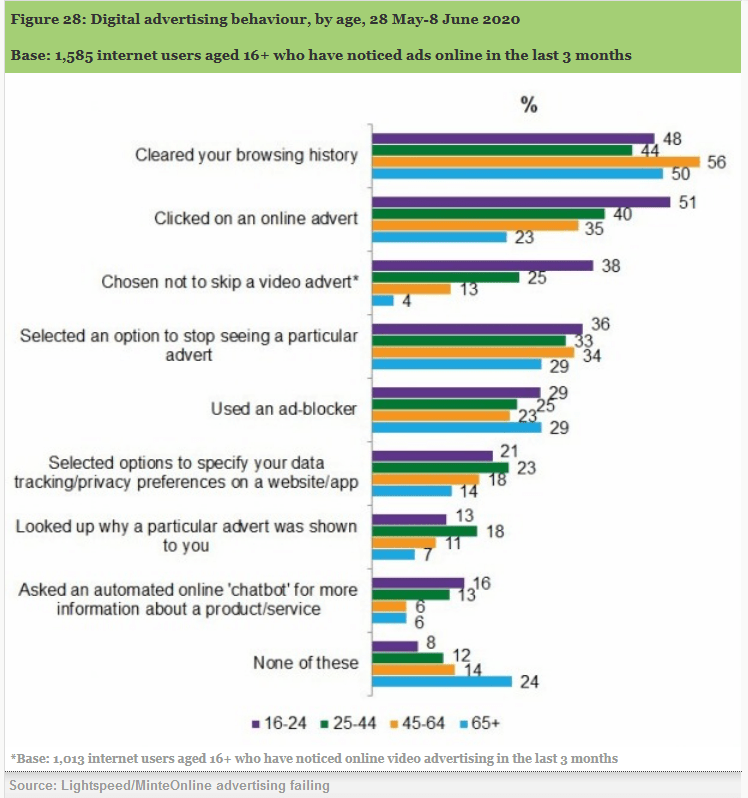
The question asked was “Which of the following have you done in the last 3 months? m. Please select all that apply.”
Consumer preferences :
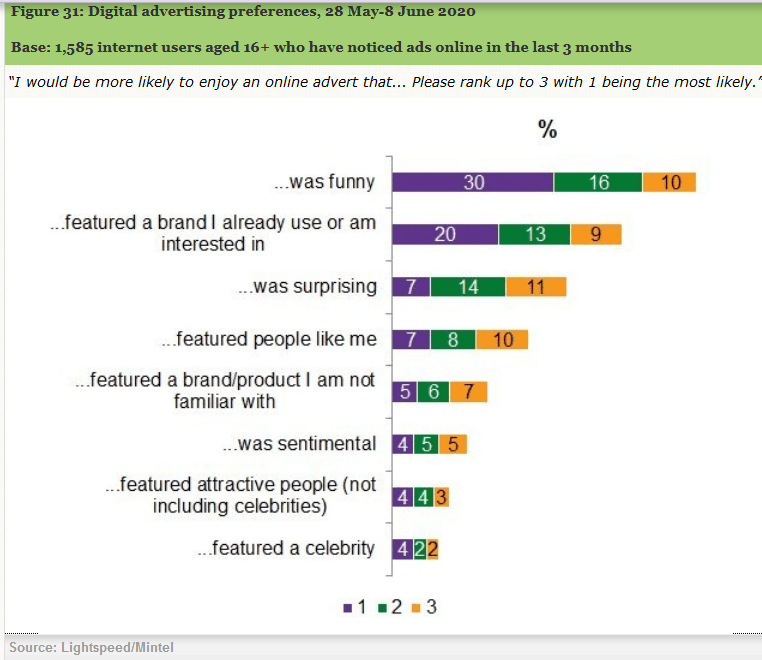
- The main factor that causes people to enjoy online adverts is if it is funny. But brands have to be aware that there is a thin line between being funny and maybe offending some potential customers, that’s why self-deprecation can be the easiest way to make an advert funny, by making fun of your own brand or the people in the ad itself;
- 21% of 16-24 year olds enjoyed a sentimental ad compared to 6% of over-55s, perhaps due to how easily sentimentality can be seen as manipulative or inauthentic;
- Many people are more likely to enjoy an advert if they are familiar with the brand or the featured people in the ad. However, brands must be careful to do not repeat themselves by showing the same ad and products to the customer who already bought it;
Customer frustrations :
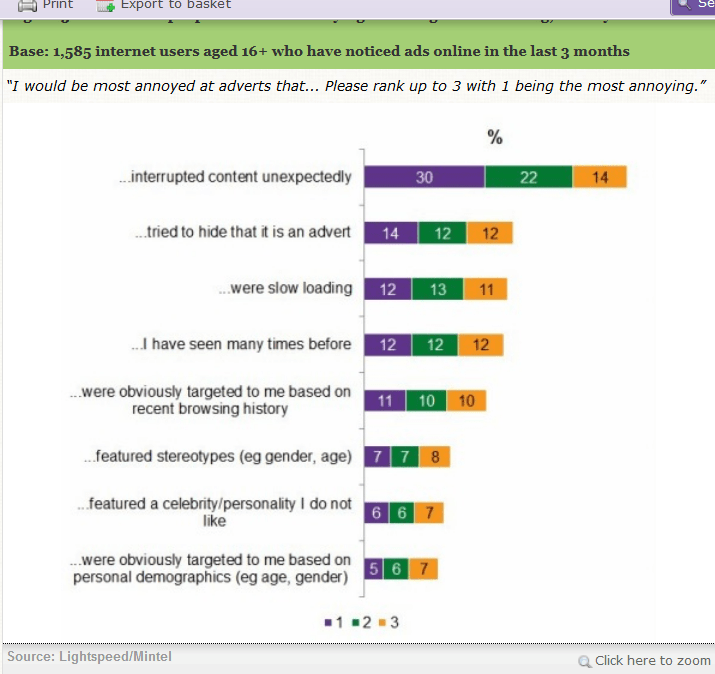
- People were most annoyed by adverts that interrupted their content unexpectedly (e.g mid-roll ads in a Youtube video). One solution for the brands would be to have more clear creators showing where adverts will be (and how long they will be).
- Brands should be transparent and should not try to disguise their ads. The best example of this is when brands try to incorporate an ad into their content (e.g Youtube) without making it clear in the video title/description that your video is sponsored.
- Young women are most likely to be annoyed by stereotypes when it comes to gender. Last year, the Advertising Standards Authority (ASA) banned the ads for Philadelphia cream cheese and Volkswagen, following complaints from the public that they perpetuated harmful stereotypes.
- Older generations are not liking the idea of being targeted based on their personal data, which could be a result of not wanting to be defined by being older and the type of advertising they feel targets older people;
.

 Savouring Marketing