

On a survey done by 5,198 students aged 16-64 from 2016, we were presented the following:
- Overview of Students – What are the main demographic traits and characteristics of this group?
- Device Ownership and Usage – How long are the students spending on mobiles each day and which other devices do they own?
- Online Behaviours – How many hours do they spend consuming media and what do they do when they second-screen?
- Social Networking – Which social networks do they use, and how do students behave inside the social space?
- E-Commerce & Brand Engagement – How many students are buying online? How do Students research and discover brands and how do they interact with them? What reasons would encourage them to promote a brand online?
- 1 Overview of Students
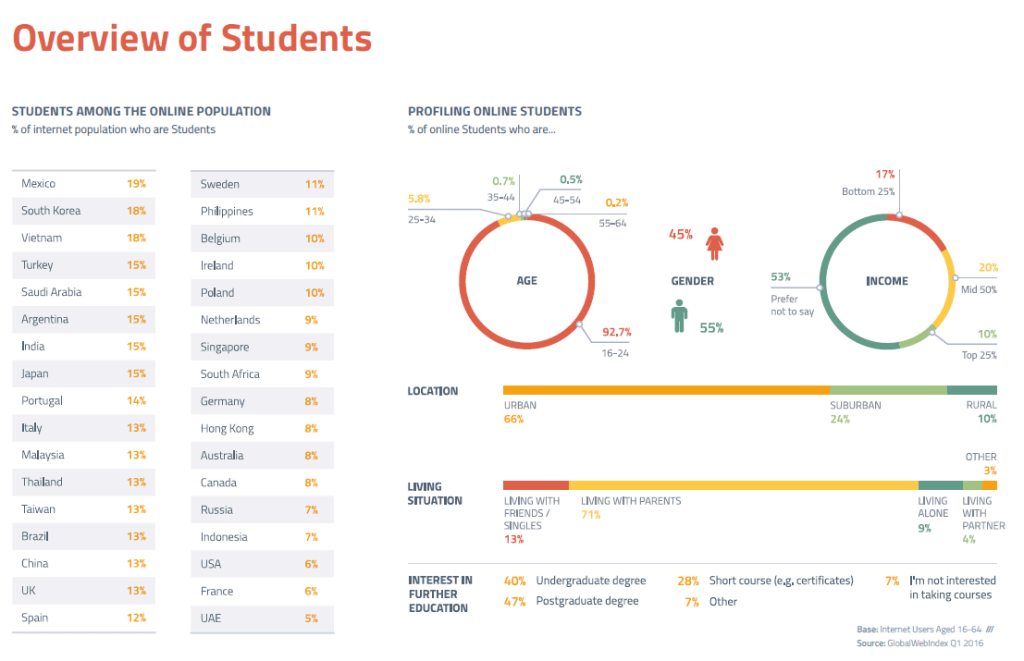
The usual student is aged between 16-24 years old, living mostly in the urban area probably with their parents and most of them want to have a postgraduate degree after they finish university.
- 2 Device ownership and usage
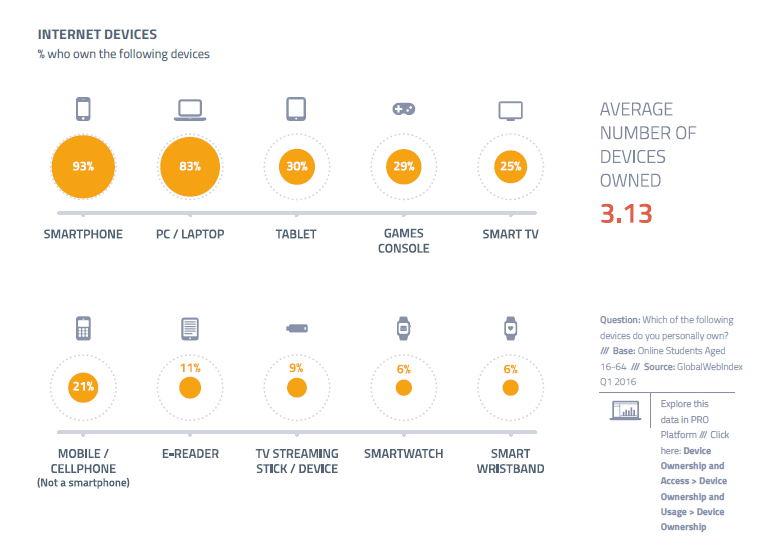
Nowadays, as you probably know, it is a must to have a smartphone and a laptop as a student to socialize and text with your friends, which makes 93% out of students to own a smartphone and 83% own a laptop or a PC. 1 in 3 students own a tablet or a game console like PlayStation or Xbox and 25% of the students use a smart TV.
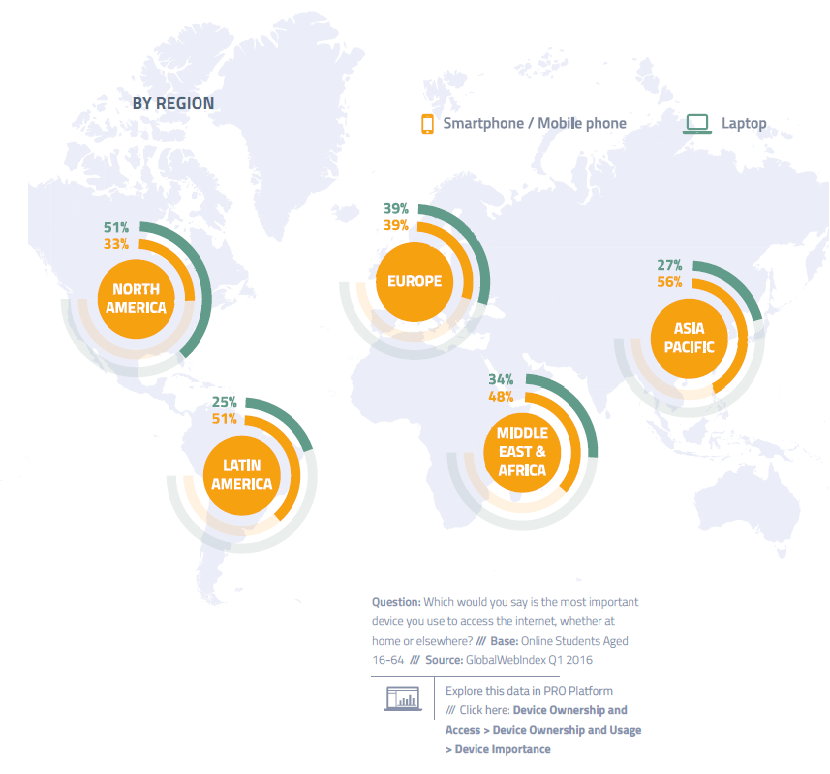
For Students, smartphones stand out as their most important device for getting online, with a considerable lead over the second-placed which is the laptop (51% vs 31%). The tablets are not considered essential anymore in the daily life of a student, being easy replaced by smartphones in time.
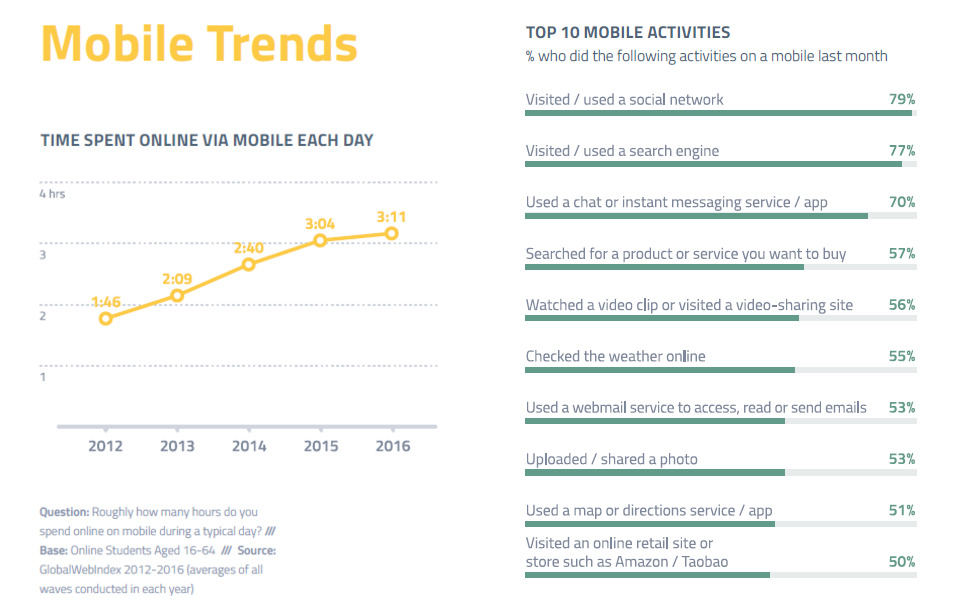
From 2012 to 2016 there was an increase in the daily time spent online from 1:46 hours/day to 3:11 hours/day, almost twice the amount of time compared to 2012. 8 in 10 students are social networking most of the time and 7 in 10 students are using a messaging service. Other students choose to search for a product or service they would like to buy or simply just checking the weather.
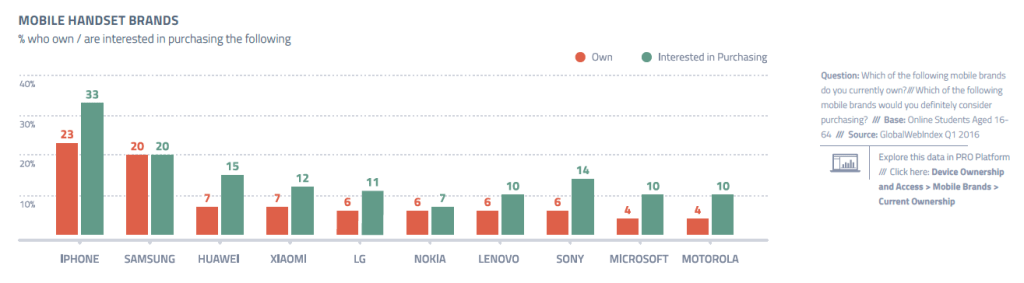
When it comes to what mobile brands students use, most of the students own an iPhone or a Samsung and also a big majority would like to buy one of these two brands.
- 3 Online Behaviours
- Daily media consumption
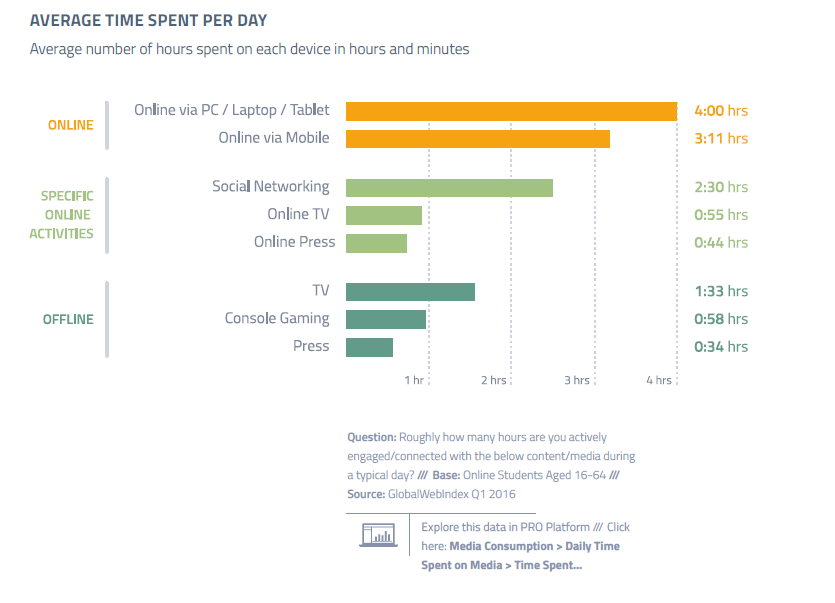
As we can observe from the image above, most of the time spent online Is via PC / Laptop / Tablet with an average of 4 hours per day and via mobile with an average of 3:11 hours per day. In this time, the usual student chooses to use social networking as an activity, with the online TV and online press less watched. Offline, the TV is leading the usage of time with 1:33 hours per day, students spending less and less time watching TV.
- Paying for online content
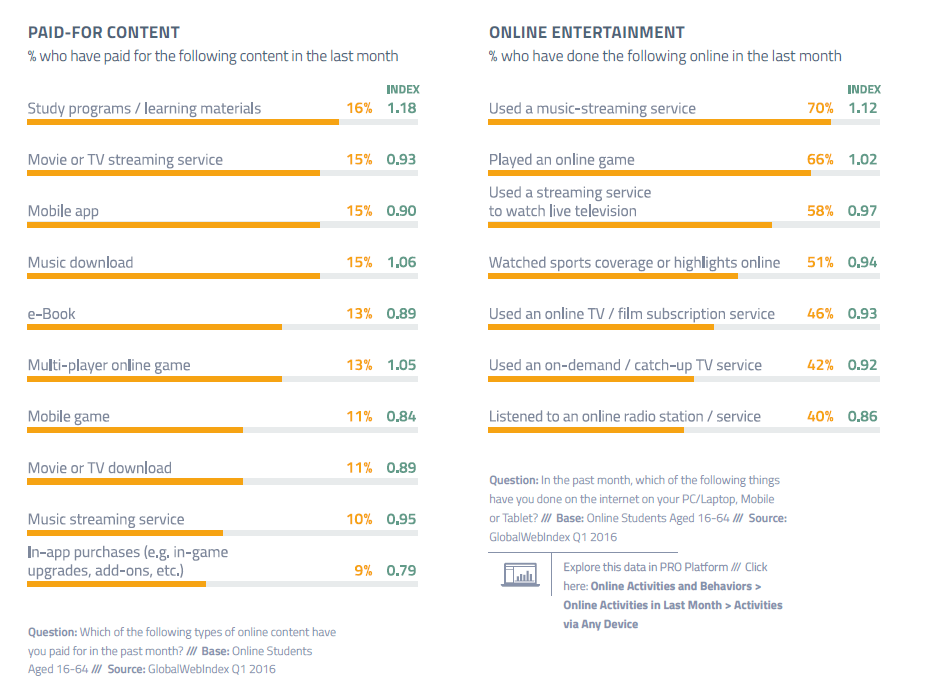
Each month, 1 of 2 students purchase some form of digital/online content. But there is a big gap between the numbers of students who use an online product/service and the number of students who pay for it. For example, 7 out of 10 among this group are using a music-streaming service but just 1 out of 10 are paying for it. Another example is that 46% are using a TV/film subscription each month but just 15% are stating that they are paying for that service.
- Gaming
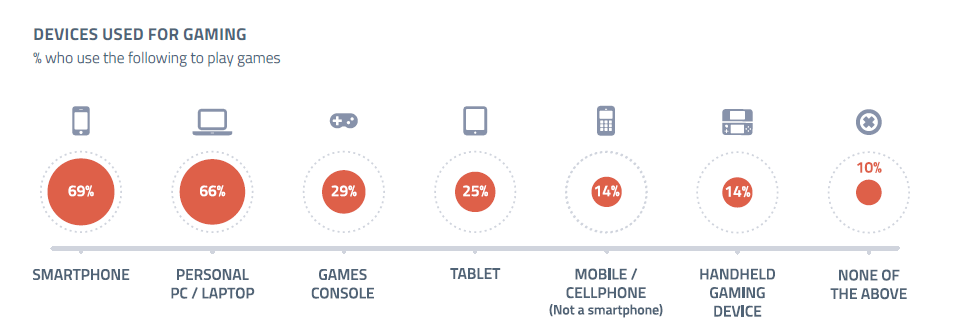
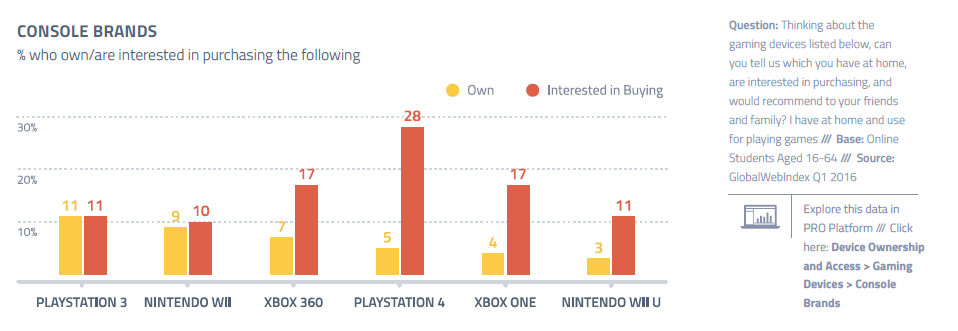
Surprisingly, more people are gaming on a phone than on a PC or laptop. 29% of them are playing games on a games console. Most of them own a PlayStation 3 and are interested in buying a PlayStation 4 or an Xbox One.
- Second Screening
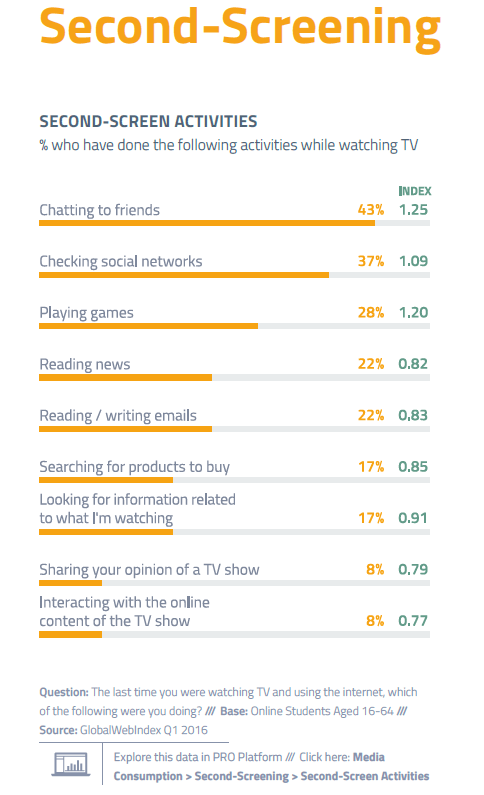
Globally, 84% of Students are now second-screening while watching TV, being 25% more likely than the average internet user to be chatting with friends (43%) or checking social networks (37%). 3 in 10 prefer to play games instead, and 22% of the students like to read news or e-mail while watching TV.
- Social Media and messaging apps
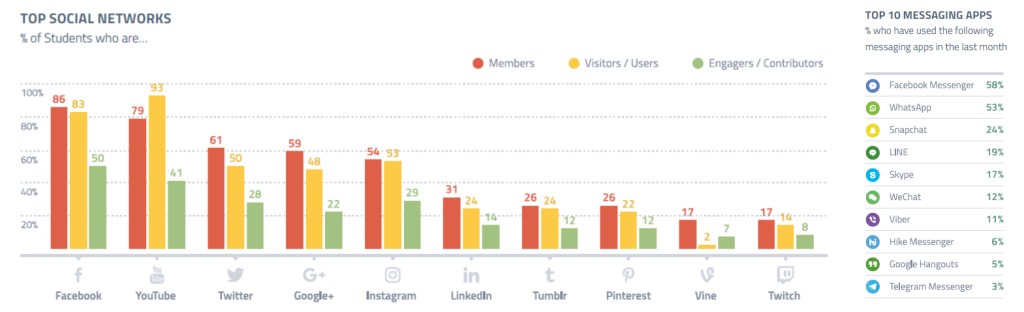
The top social media networks used by students are Facebook, YouTube, Instagram, and Twitter. When it comes to the most used messaging app Facebook Messenger has a tight battle with WhatsApp, having a difference of just 5%.
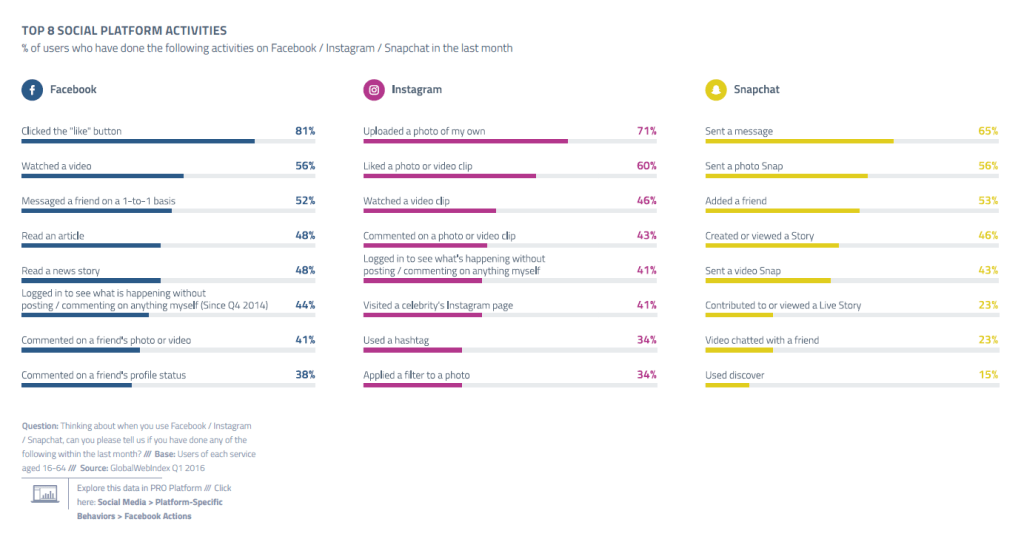
Did you ever think what most people do on social media? With the help of GWI here we have top 8 social platform activities for Facebook, Instagram and Snapchat.
Facebook is mostly used for entertainment purposes and news stories (even if I would not recommend that). Behind the main purpose of Instagram which is mainly used to upload personal photos, for students it is also a way to follow other people’s lifestyles. Snapchat is an important platform for students to keep peers updated with their daily lives. (I’m not a fan of Snapchat anyway, maybe because of this)
- E-commerce and brand engagement
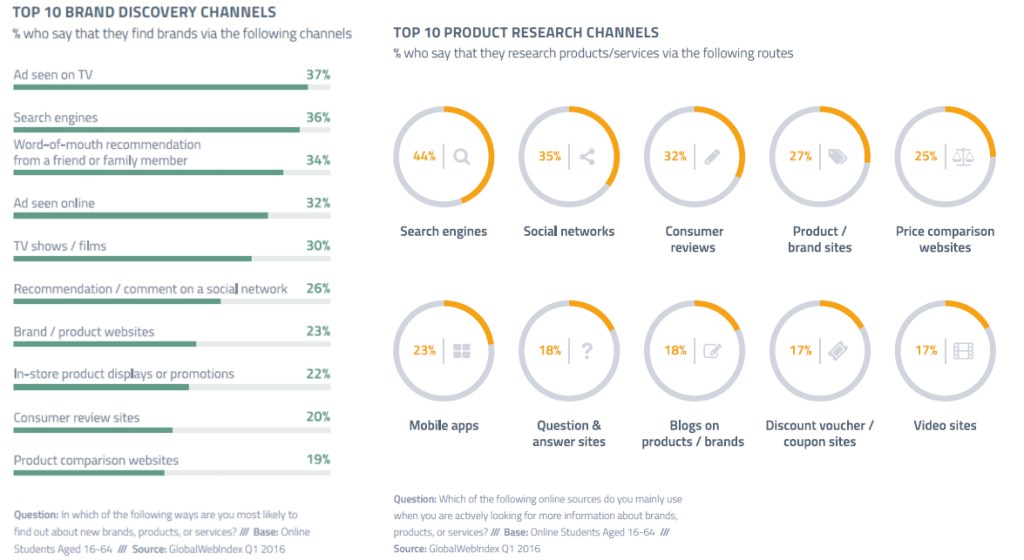
- How students usually find and research about a brand?
Most of the students find brands via ads on TV or search engines and 1 in 3 students discovered brands by word-of-mouth recommendation. When it comes to research, using search engines is the most popular way to research a brand, followed by social networks and consumer reviews as secondary sources of research.
- What factors can influence a student when choosing a product online or brand?
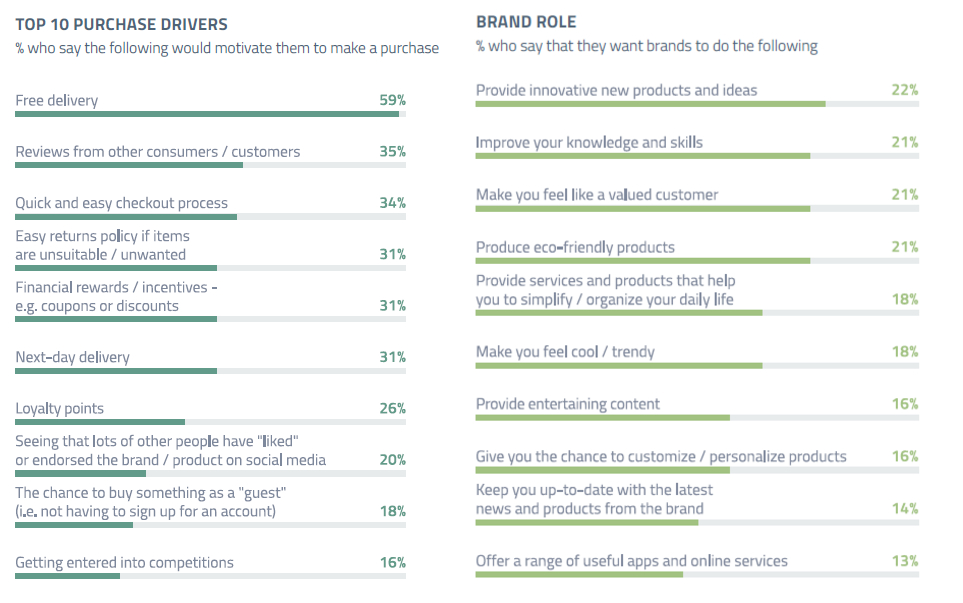
Free delivery is by far the most important factor when it comes to buying something online(59%), but also the reviews from other customers (35%) and an easy checkout/return process (34%) is important for a student. They want a brand that provides innovative new products and ideas (22%), improve knowledge and skills or is an eco-friendly product.
What do you think about these stats? Which fact do you think it is the most interesting for you? Does it apply to you? Leave a comment below!
 Savouring Marketing